
Scam breakdown
An Unknown International Number Called You Once? Here's What It Means
Short answer
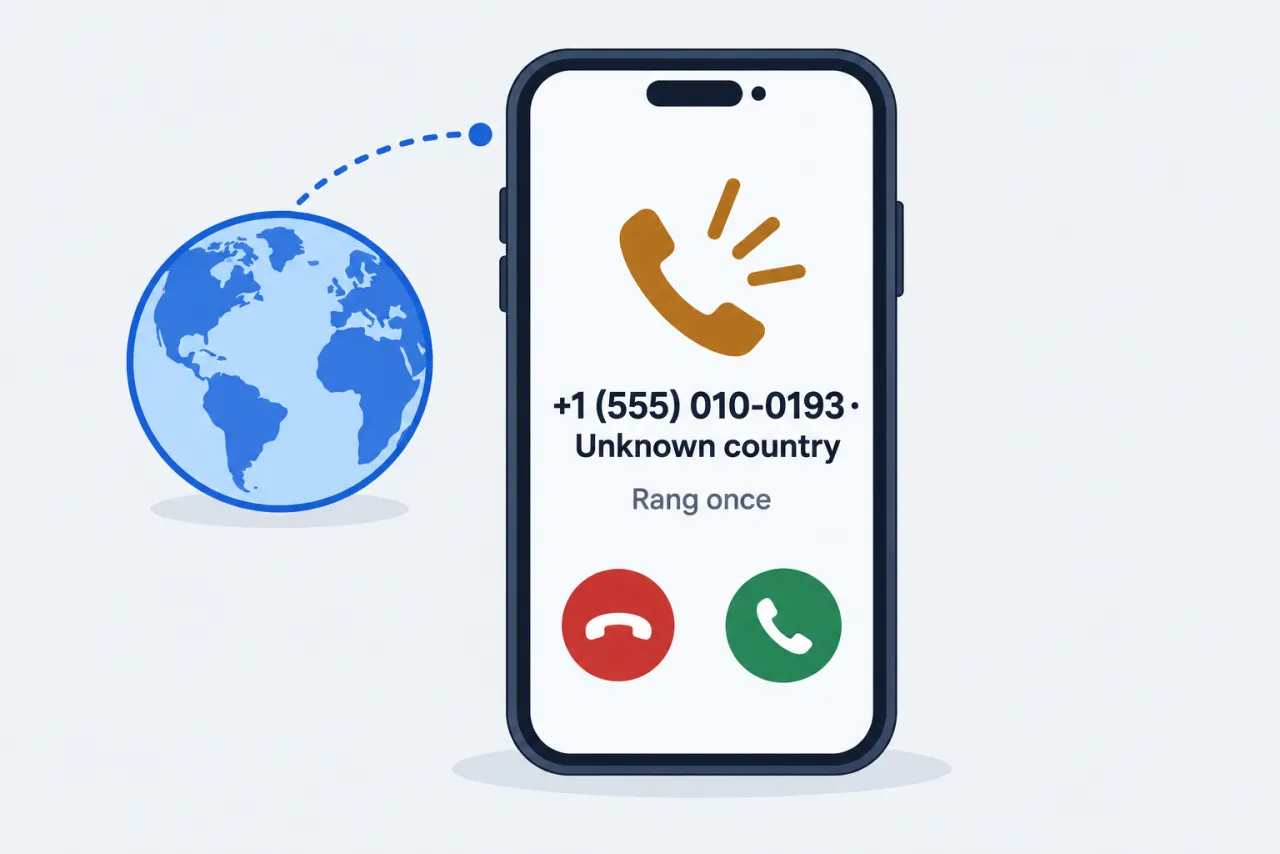
A single ring from a country code you don't recognize is usually not a real caller trying to reach you. It is often a one-ring setup that hopes you will call back a costly line. This page explains how to read the number, spot the tell, and block and report it, without ever calling back.
Learn the terms firstWe don't run a lookup database and can't tell you who owns a private number. This is about staying safe, not tracking anyone.
- Defense, not lookup
- We help you decide whether to answer, block and report, not find who owns a number.
- Official guidance
- The steps point to the FCC, the FTC and your phone's own call settings.
- No people-search
- A phone number can't reveal a private person's name, address or location, and we never try.
How a one-ring international scam sounds versus a real call
Match what happened against the tells below before you decide to do anything.
-
“A number you don't know rings once from abroad, then stops.”
Why it’s fake: One ring from a country code you don't recognize is a classic setup to make you call back a costly line.
-
“The number looks like an ordinary US number, but you don't recognize the area code.”
Why it’s fake: Scammers pick codes that look domestic: 809 (Dominican Republic) dials like a US area code, and 232 (Sierra Leone) can pass for one at a glance. The FCC warns about both.
-
“A voicemail or text follows the ring, urging you to call back about a prize, parcel or relative.”
Why it’s fake: A real person or company you deal with leaves a voicemail or text; urgency plus a foreign number is a pressure tactic.
-
“The number rings you again and again, hoping curiosity wins.”
Why it’s fake: Repeated one-ring calls are still bait; each callback can bill you at international or premium rates.
What the real organization does
- Someone abroad who really needs you leaves a voicemail or text saying who they are, not a single silent ring.
- Ignoring an unknown international ring is safe; anyone who genuinely needs you can leave a voicemail or send a text.
- The only number worth dialing about a foreign missed call is one you already hold, from a statement or an official site, not the + number that appeared on your screen.
- You report a suspected one-ring call to your carrier and the FCC instead of calling back.
What to do with an unknown international number in 4 steps
The safe response is the same whether the call was a scam or a wrong number.
Menu names vary by phone maker, carrier and OS version. For broader cover, Silence Unknown Callers (iPhone) or your Android spam filter also helps, though real callers may go to voicemail.
-
Don't call back
Leave the missed international number alone; returning a one-ring call is exactly what the scam wants.
-
Block the number
In your phone's Recents, open the call and choose Block so that number can't ring you again.
-
Ask your carrier about international blocks
If you never call abroad, ask your carrier to block outgoing international calls; options vary by carrier and plan.
-
Check your bill, then report
If a callback shows international or premium charges, dispute them with your carrier and file an FCC complaint.
Report a one-ring call to the FCC →
Questions people ask
Should I call back an international number I don't recognize?
No. A single ring from a country code you don't know is often a one-ring (wangiri) scam, and calling back can connect you to a costly international or premium line. If it matters, the caller will leave a voicemail or a text you can verify.
Why did an unknown international number ring only once?
One ring is designed to leave a missed call so you feel prompted to call back. The charge, not a conversation, is the goal, so the safest move is to ignore it and block the number.
Can I find out who called from an international number?
A country code only tells you which phone system the number belongs to, and +1 also covers several Caribbean nations. A reverse check may surface a business listing or crowd and carrier spam reports, but a number will not reveal a private person's name or location. Treat it as a choice about whether to answer, block and report, not a way to identify someone.
How do I stop international spam calls?
Block the specific number in your Phone app, turn on Silence Unknown Callers or your Android spam filter, ask your carrier about international or spam-call blocking, and report repeat offenders. Options vary by carrier, region and OS version.
What should I do if a callback showed up on my phone bill?
Contact your carrier right away to flag the charge, and file a free complaint with the FCC about the one-ring scam. Keep the date, the number that called and any callback number you were given.
Official sources
Rules and phone settings change. Check the current page before you act.
- fcc.gov — fcc.gov