
Explainer
What Is Caller ID Spoofing? A Plain Explanation
Short answer
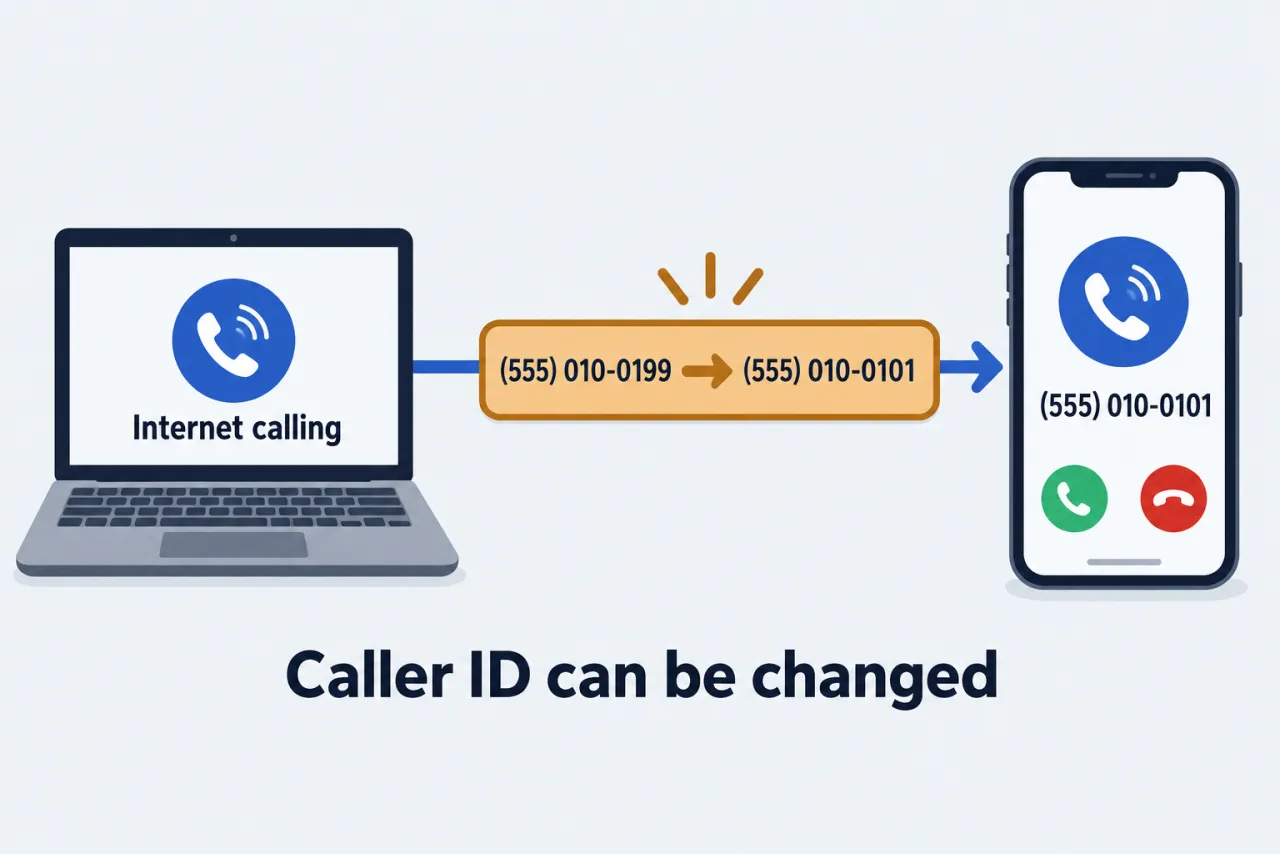
Spoofing is when a caller deliberately changes the name or number your phone shows, so the call looks like it comes from someone else. Caller ID is information that travels with the call, and some internet calling services let the calling side enter whatever number it wants, so the display can be false. That is why a familiar or local number on your screen proves nothing about who is really calling.
Start with the key termsThis page explains spoofing so you can defend against it; it never explains how to do it.
- Defense only
- We explain spoofing so you can spot and report it, never how to spoof.
- Based on FCC and FTC
- Definitions and legal points follow the FCC and FTC consumer guides.
- Reviewed September 2026
- Phone labels and carrier features vary, so we describe them generally.
Is Caller ID Spoofing Illegal? It Depends on Intent
Changing the displayed number is not always a crime; the purpose behind it decides.
| Criterion | Permitted display change | Illegal spoofing |
|---|---|---|
| Purpose | Shows a number people can safely call back, or protects the caller's safety. | Meant to defraud, cause harm, or wrongly obtain money or information. |
| Typical example | A doctor calling from a personal mobile but showing the office number, or a business showing its toll-free line. | A scam call dressed up as your bank, a government agency, or a local number. |
| Whose number shows | A number the caller is entitled to show, such as their office line, or one withheld for safety. | Often a real stranger's number, used without their knowledge. |
| Who it protects or harms | Domestic-violence shelters may alter caller ID to keep callers safe. | Used to stalk, harass, or get around a protective order; the law counts emotional harm too. |
| Consequence | Allowed under FCC rules when there is no intent to defraud or harm. | The FCC says penalties can reach up to $10,000 per violation. |
Legal or not, the number on your screen is never proof of who is calling, so verify through an official number before you act.
Signs a Call May Be Spoofed
Spoofed calls often share a few tells you can spot before you answer or act.
-
Your own number
Your own number calling you is a known spoofing sign, so don't answer.
-
Look-alike local number
Same area code and first digits as yours is neighbor spoofing, not a nearby caller.
-
Familiar name, pressure
A bank or agency name that demands codes or payment is a classic spoofed-call pattern.
-
Callback reaches bystander
Calling back reaches someone who never called, because the number belonged to a bystander.
Note: For ways to defend against these calls, see Protect Yourself From Phone Scams: A Checklist.
Questions people ask
Can I trust a call if caller ID shows my bank or a government agency?
No. Caller ID can be faked, and the FTC warns it can be nearly impossible to tell whether the displayed information is real. Hang up and call the official number printed on your card, statement, or the agency's website.
If carriers check caller ID now, why do spoofed calls still get through?
Call authentication (STIR/SHAKEN) works on IP networks, so calls that pass through older networks or some overseas gateways may not be checked, and a checked number still says nothing about the caller's honesty. That is why a number on your screen is a hint, not proof. Options vary by carrier.
If a spoofed number looks local, is the caller nearby?
No. A local-looking number says nothing about where the caller is; that is why scammers pick it. Treat it like any unknown call.
Can I find out who is really behind a spoofed call?
Not reliably, and we don't offer that; the number shown may belong to someone who never called you. Block, report to the FTC or FCC, and contact police if you are threatened. If strangers say your own number called them, see My number is being spoofed: My Number Is Being Spoofed: What You Can Realistically Do.