
Step-by-step guide
Is This Number Safe to Answer or Call Back?
Short answer
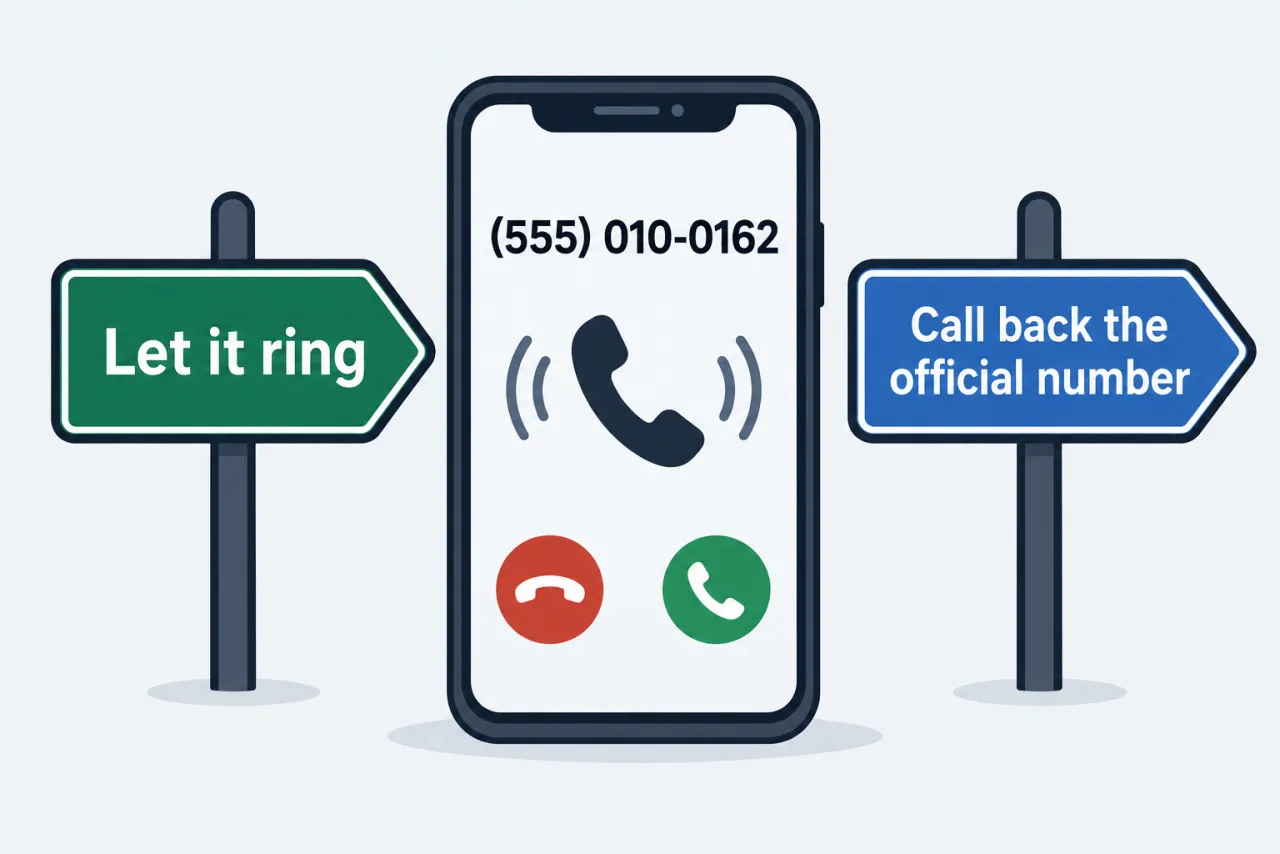
Caller ID can be faked, so it can't tell you whether a call is safe. Judge the call by how it behaves — and when in doubt, hang up and call the official number yourself.
See the signs of a safe vs. scam callWe don't run a lookup database and never ask for the number or your details.
- Defense, not lookup
- We help you decide, block, and report — we don't reveal who owns a number.
- Official steps only
- Every move points to your phone, your carrier, or the FTC and FCC.
- Reviewed September 2026
- Menu paths vary by device and carrier, so we hedge and link official pages.
Signs a Call Is Likely Safe vs. Likely Spam
Compare how the call behaves — not what caller ID shows — before you answer or call back.
| Criterion | Likely a real call | Likely spam or a scam |
|---|---|---|
| How it handles verification | Is fine with you hanging up and calling back on the official number you look up. | Pushes you to stay on the line and refuses to let you call back on an official number. |
| Leaves a message | Leaves a voicemail or text saying who they are and why. | No message, or a recorded pitch that asks you to press a key. |
| What your phone shows | A number you already have saved or looked up yourself. | A carrier warning such as Spam Risk, or a number that looks like your own. Both are hints, not proof. |
| Calling back | You return the call on a number you already hold or looked up yourself. | A one-ring or unknown international number can bill premium or international rates, and engaging confirms your number is live. |
| Call-back number | You can look up the official number yourself and reach them there. | Insists you use only the number the caller gives you. |
Caller ID alone cannot answer 'is it safe' — decide from how the call behaves, and when in doubt, hang up and call the official number yourself.
How to Safely Verify a Claimed Caller
If a caller claims to be your bank or an agency, verify it yourself in five steps.
Works for any inbound call — a claimed bank, agency, delivery, or 'tech support'.
-
Give nothing on the call
Don't share codes, payments, or personal details while the caller has you on the line.
-
Hang up
End the call, especially if it feels urgent or threatening.
-
Find the official number yourself
Use the number on your card, a printed statement, or the organization's official website.
-
Call that number back
Ask whether anyone really tried to reach you — never dial the number the caller supplied.
-
Block and report
Block the number in your phone, and report the scam call to the FTC at ReportFraud.ftc.gov.
See how to read an unknown number before you even pick up →
Questions people ask
Is it safe to answer a call from an unknown number?
Letting voicemail screen an unknown number is the safer default. A real caller leaves a message. If you do answer a recorded call, don't press keys or speak, because engaging can confirm your number is live. Share nothing, and hang up to verify on a number you look up yourself.
A caller says they're from my bank or another organization and gave me a call-back number. Should I use it?
Not the number the caller gave you. That line can lead straight back to the scammer. And because caller ID can be faked, the number on your screen may belong to someone else entirely. Look up the organization's official number yourself (card, statement, official website) and call that.
Can calling back an unknown number cost me money?
It can. One-ring scams hope you return a call to an international or premium line billed at high rates. Don't call back numbers you don't recognize, and if a charge appears, contact your carrier and file a complaint with the FCC.
A caller says a relative is in trouble and needs money. How do I check?
Hang up and call the relative, or another family member, on a number you already have. Don't use a number the caller gives you. Real emergencies survive a two-minute check, and anyone who pushes for gift cards, wire or crypto is a scammer.
What should I do after a suspected scam call?
Block the number in your phone. Report unwanted or robocalls at DoNotCall.gov, and if you lost money or have details about the scammer, report at ReportFraud.ftc.gov. You can also file with the FCC, especially if caller ID was spoofed. Reporting helps carriers label and block callers, though it won't stop that one caller instantly.
Official sources
Rules and phone settings change. Check the current page before you act.
- reportfraud.ftc.gov — reportfraud.ftc.gov