
Explainer
My Number Is Being Spoofed: What You Can Realistically Do
Short answer
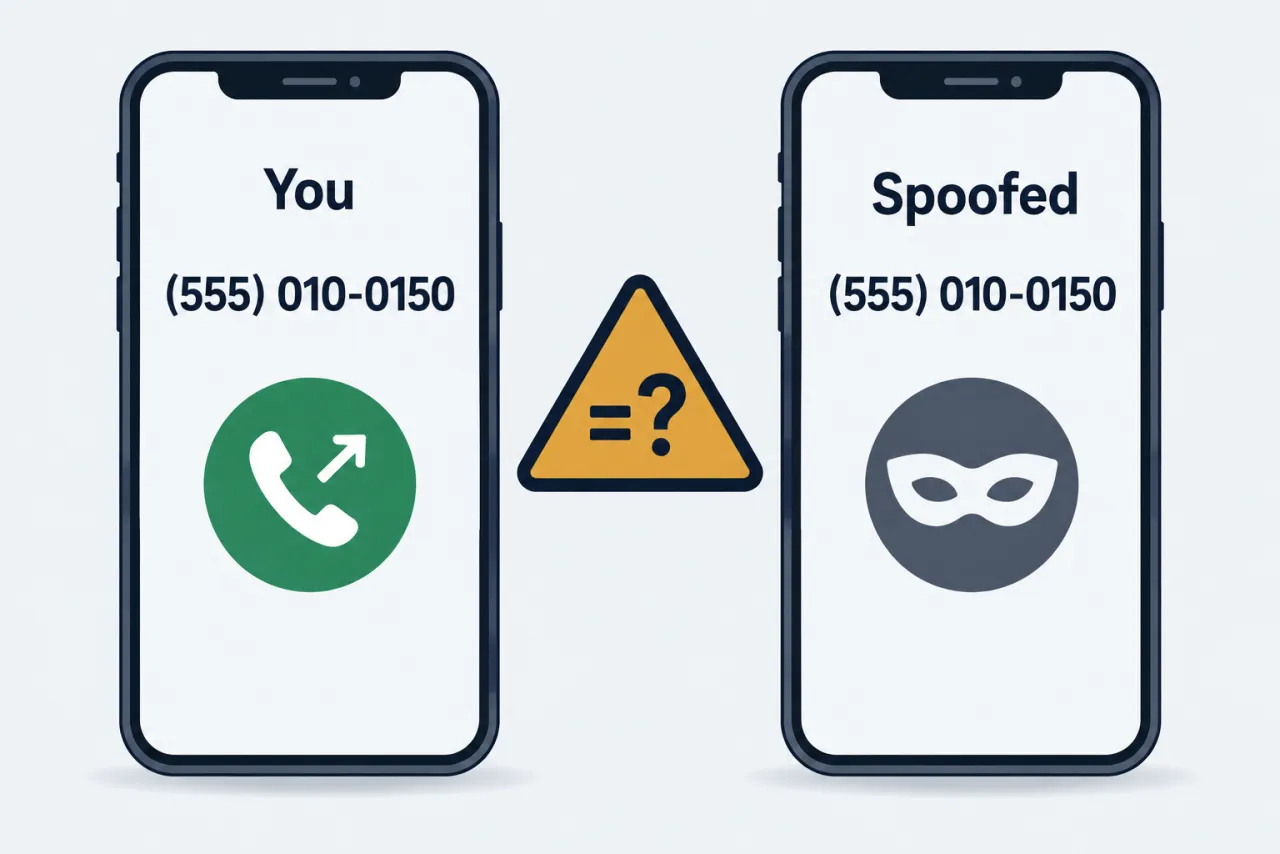
When people you have never contacted call back angry, a scammer is most likely showing your number as their fake caller ID. Spoofing doesn't need any access to your phone, and you did nothing wrong. You can't switch the spoofing off, but you can protect your voicemail, answer the fallout calmly, report it, and let it pass.
Check the signs on your phoneWe don't run a lookup service and can't unmask who spoofed your number; this page is about protecting yourself.
- Honest limits
- No one can promise to stop others from showing your number as their caller ID.
- Official channels only
- We point you to the FCC, the FTC and your own carrier, never a paid lookup.
- Independent
- Not affiliated with any carrier, phone maker or app; menu names vary by device.
Signs on your own phone that your number is being spoofed
Your own call log, texts and bill can confirm the calls never left your phone.
| Sign | What to check: | Where to look |
|---|---|---|
| Outgoing calls you never made | Strangers say you called at a certain time, but your outgoing history shows no call to them then. | The Recents or call history screen in your Phone app, filtered to outgoing calls. |
| A wave of unknown callbacks | Several unfamiliar numbers ring or text within hours asking who you are or telling you to stop calling. | Missed calls in Recents and new threads from unknown senders in your messages app. |
| Voicemails about calls you didn't place | Messages that mention a sales pitch, a prize or a threat you never delivered. | Your voicemail inbox, in the Phone app or by dialing your carrier's voicemail number. |
| Your bill or usage log | No matching outgoing calls or texts in your carrier's usage detail for those numbers and times. | The usage or call-detail section of your carrier's app or online account. |
Note: These checks cover your own phone and your own carrier records only; they do not reveal who used your number, and nothing here needs access to anyone else's phone.
What you can't do about spoofing, and what to do instead
No one can switch spoofing off, so each limit below comes with what actually helps.
You can't stop others from using your number as caller ID
Spoofing fakes the displayed number on someone else's call; your phone and account aren't involved.
Instead: Report it to the FCC and let your carrier know, then let the wave pass.
No service can 'unspoof' or remove your number
There is no official removal procedure, so any paid fix claiming one is a red flag.
Instead: Spend your effort on a voicemail PIN, calm replies and a complaint on record.
You can't find out who is spoofing you
The real caller hides behind your number, and neither lookups nor we can unmask them.
Instead: Report it to the FCC to feed enforcement; contact police if anyone threatens you.
Changing your number isn't a reliable cure
Spoofers usually use a number briefly and move on, so a new one may soon be picked too.
Instead: Wait it out first; consider a change only if the calls turn into targeted harassment.
An FCC complaint won't get you a personal fix
The FCC doesn't resolve every complaint; reports feed enforcement and policy.
Instead: File anyway, and add an FTC report if you lost money or shared personal details.
Five realistic steps while your number is being spoofed
None of these stops the spoofing, but together they limit the damage and the stress.
Menu names vary by carrier, phone maker and OS version; look in your Phone app's voicemail and call settings or ask your carrier.
-
Set a voicemail PIN
Some voicemail opens automatically from your own number, so a spoofer could reach it without a PIN.
-
Reply briefly, once
If you choose to answer someone asking why you called, send one short line, don't continue the thread, and don't return unknown calls.
-
Consider a temporary greeting
An optional short voicemail note saying your number is being spoofed can cut repeat callbacks.
-
Report it to the FCC
Use the unwanted calls category and note that your own number is being spoofed.
-
Tell your carrier
Ask what they can note or check on your line; available options differ by carrier.
File a complaint with the FCC →
What this guide covers
This guide helps you
- Help you confirm the calls didn't come from your phone
- Show you how to protect your own voicemail
- Point you to the FCC, the FTC and your carrier to report
- Tell you plainly what can and can't be done
This guide never
- Promise to remove or stop spoofing of your number
- Unmask, locate or track the person behind the calls
- Sell a paid fix or a number lookup
- Explain how caller ID spoofing is done
Spoofing happens on the calling side of the network, not on your phone, so the honest answer to 'make it stop' is to protect your voicemail, report it, respond calmly and wait for the spoofer to move on.
Questions people ask
Is my phone hacked if my number is being spoofed?
Almost certainly not. Spoofing means someone else's call displays your number as its caller ID; it doesn't require any access to your phone or account. If your outgoing call history and your carrier's usage detail don't show those calls, they didn't come from your device. Setting a voicemail PIN is still worth doing, because some voicemail systems open automatically for calls that appear to come from your own number.
How long does spoofing of my number last?
There is no fixed timeline. Spoofers typically use a number for a short period and then move on to another, so the callbacks often fade on their own after a few days or weeks. It can also return later. Keep reporting new waves rather than assuming it is over for good.
Can I get in trouble for calls made with my spoofed number?
FCC rules prohibit spoofing done with intent to defraud, cause harm or wrongly obtain something of value, and that is done by the person faking the caller ID, not the owner of the number shown. Filing an FCC complaint noting your own number is being spoofed documents what happened; if you receive legal threats over the calls, talk to a lawyer or local police, and save any threatening messages.
Should I change my phone number?
Ask your carrier what it can do on your line before deciding. A change has real costs: you have to update your bank, other accounts and any 2-step verification codes tied to the number, and tell all your contacts. Many people find the callbacks fade before that effort pays off.
Should I answer or call back the unknown numbers that start calling me?
No. The FCC advises not answering or engaging with unknown callers and robocalls, because engaging tends to invite more calls. Reply once, briefly, if you choose to, and only by text, and stop if they push for details or money (see Is This Text a Scam? How to Tell Fast); do this only to people who contact you to ask why you called, and don't return calls to unknown numbers that follow.
Official sources
Rules and phone settings change. Check the current page before you act.
- consumercomplaints.fcc.gov — consumercomplaints.fcc.gov