
CallerCheck reference
Responsible Use: What We Will and Won't Help With
Short answer
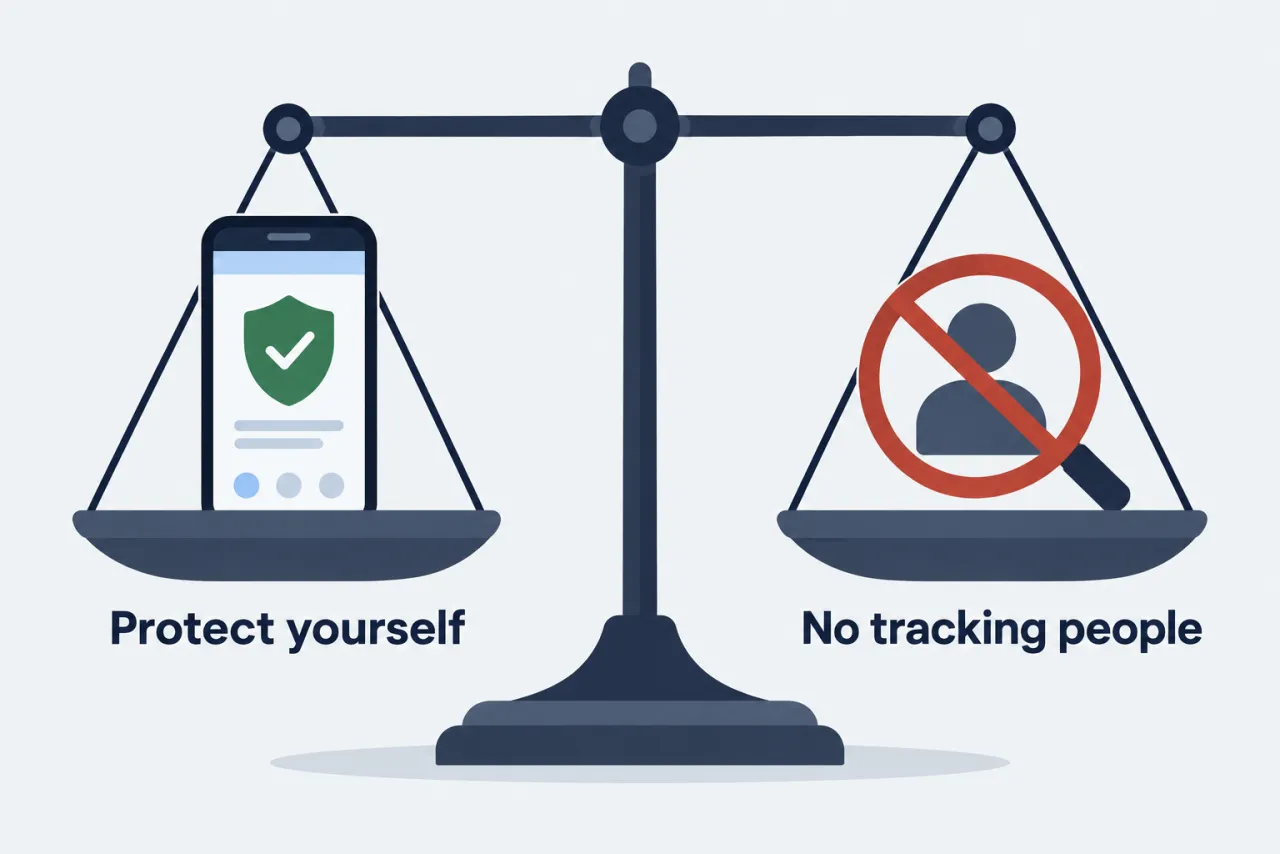
Every guide here is about one question: is the call you received spam or a scam, and how do you block and report it. We will not help anyone use a phone number to find, follow or expose a private person, and this page explains where that line sits and what to do instead.
See what we do and never doWe don't ask for the numbers that called you, and we don't look anyone up.
- Caller defense only
- Identify spam patterns, block the caller, report it. That is the whole scope.
- No people-search
- We never try to reveal a private person's name, address or whereabouts.
- Every no has an alternative
- When we refuse a request, we point to the police, the FTC, the FCC or your carrier.
What this guide covers
This guide helps you
- Help you recognize the patterns of spam and scam calls
- Show you how to silence, filter and block callers on your own phone
- Point you to the FTC, the FCC and your carrier to report a call
- Explain honestly what a reverse check can and cannot tell you
This guide never
- Find, track or locate a person by their phone number
- Reveal a private caller's name, home address or identity
- Help anyone monitor another person's calls or phone
- Claim we can look up who owns any cell number
A phone number does not publicly reveal a private person's identity; only business listings, spam reports and what someone chose to publish are visible, so we keep every guide on protecting you from calls you received.
Requests we turn down, and what actually works instead
Each refusal comes with the legitimate route that can really help you.
Find out who called and threatened or harassed me
A reverse check cannot unmask a private caller, and the number may be spoofed.
Instead: Save the call log and voicemails, then report threats to local police and your carrier.
Get the home address or real name behind a number
Subscriber details are private and not publicly lookupable; pursuing them can enable stalking.
Instead: For a legal matter, ask police or a lawyer about a court process to identify the caller.
Track where a phone or its owner is right now
Locating a person by their number is surveillance, and it is outside this site entirely.
Instead: If someone's safety is at risk, call 911 or your local emergency number.
Monitor a partner's, employee's or relative's calls
Watching another adult's phone without consent can be illegal and harmful.
Instead: Talk with them; for work phones, follow a written, disclosed company policy instead of secret monitoring.
Unmask a spammer so I can confront them
Caller ID is easily faked, so the displayed number often belongs to an innocent person.
Instead: Block it and report it to the FTC or FCC, whose reports feed enforcement and carrier labeling.
How we handle requests that cross the line
The same defense-only frame applies to how the site itself treats you.
-
No monitoring setups
We won't explain how to watch another person's calls, even on a shared plan.
-
Threats go to police
A threatening call gets the same answer every time: save evidence, contact police.
-
No workarounds
We won't suggest paid lookups or tricks to identify a private caller.
-
A real alternative
Every time we say no, we name the route that can actually help.
Note: These commitments cover every guide on CallerCheck.
Questions people ask
Is it legal to try to find out who owns a number?
Looking at public business listings and spam reports is fine, but a private subscriber's name and address are held by the carrier. Getting those records normally takes a legal process, such as a police investigation or a court order. This is general information, not legal advice; for a specific situation, talk to the police or a lawyer.
Someone keeps calling and threatening me. What should I do?
Don't engage. Keep the call log, voicemails and any texts, and report threats to your local police; call 911 if you are in immediate danger. You can also ask your carrier about blocking and report the calls to the FTC or FCC. Police, not a reverse check, have the legal process to identify a caller.
Why won't you help me find where a caller is?
Locating a person by their phone number is surveillance and can put people in danger, so it is outside this site entirely. If you believe someone is at risk, contact emergency services. If the caller is simply unwanted, blocking and reporting are the tools that work.
Can I set up call blocking on my child's or parent's phone?
Yes, with their knowledge. Use that phone's own silencing and blocking settings, or your carrier's family controls, and set them up together. Blocking settings are for cutting spam, never for monitoring whom they talk to.